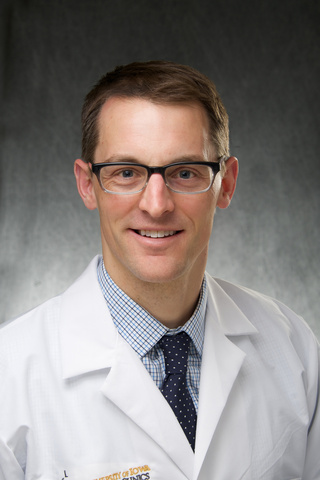
Bradley Erickson, MD, MS, was recently recognized with the Leonard Tow Humanism in Medicine Award, a national honor that celebrates compassionate care and humanism in health care. In his role as the Rubin H. Flocks Professor of Urology and director of functional urology in the Department of Urology, his clinical work spans a wide range of complex conditions—from urologic trauma to cancer survivorship.
In this Q&A, Erickson shares insights from his practice and reflects on the values that guide his approach to medicine and patient care.
What initially drew you to the field of urology, and specifically to functional and reconstructive urology?
I had early mentors that were very impactful. They loved their job and that’s what mattered most to me. So, I guess I just wanted what they had. As far as reconstructive urology goes, I wanted to be able to use my surgical skills to improve my patients’ quality of life. Many of us do things for our patients that increase their lifespan. I’ve always been more attracted to improving their day and their week. To get them to their grandson’s graduation. To allow them to take that vacation they’ve been putting off for years.
You’ve spent a significant part of your career at the University of Iowa. What has it meant to you to train, practice, and lead here?
You grow where you’re planted. For better or worse (mostly better) Iowa is where my family and people are. It’s where I was planted. So, it means a lot to me that I can provide complex, tertiary care to people I’ve grown up with all my life. Iowa is a special place. Iowans are special people. Iowa has given me a lot and now I’m giving some of it back.
Can you share an experience or patient interaction that helped shape your perspective on compassionate care?
I have shed many tears with, and received many hugs from, elderly Iowa farmers after they told me that after their surgery, they’ve been able to help with the harvest for the first time in years. These brief, intimate encounters in the middle of a busy clinic are what keeps me coming back for more.
What are some current challenges or opportunities in the field of reconstructive urology that you’re particularly passionate about?
Some of our cancer treatments meant to kill tumor cells can also lead to destruction of normal tissue. Because much of the reconstructive care I provide deals with the anatomic and functional problems that can occur after cancer treatment, I’m especially interested in the research and clinical efforts that aim to minimize damage to normal tissues and improve the normal tissue’s ability to repair itself.
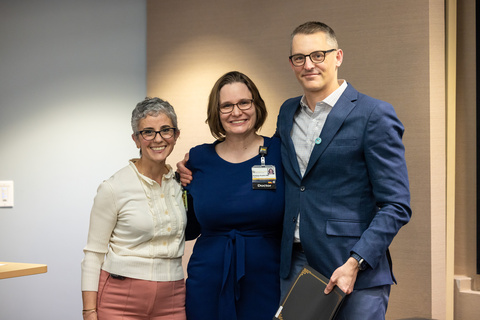
What keeps you grounded in your work?
We’ve all been given gifts. The fact that I can do what I do isn’t something that I take for granted. Knowing that I’m a part of something bigger than me, where we’re all working together in whatever capacity we can to make each other happy, healthy, and fulfilled, makes the balance easy to maintain. Ultimately, respecting our patients’ lives and the individual contributions they’ve all made to the bigger picture makes my job easier.
What advice do you give to trainees or early-career physicians about maintaining empathy and humanity in high-stakes or high-pressure clinical environments?
Take care of yourself. Listen to your body. Meditate. When the plane is going down, we must remember to put our own masks on first before we help those around us.