It is often said that medicine is both an art and a science—and Hippocrates said, “Wherever the art of medicine is loved, there is also a love of humanity.”
The quote speaks to the tie between healing human beings and understanding what it means to be human.
By supporting scholarship in ethics and the arts, the UI Carver College of Medicine’s Humanities Distinction Track gives medical students space to explore these concepts during medical training. Students have completed projects ranging from novels, memoirs, and poetry collections to scholarly writing, photography, and more in search of a deeper understanding of medicine.
Drawing connections
Growing up in Fresno, California, Annee Rempel (22MD) had deep ties to the Carver College of Medicine, where her mother, aunt, and grandfather all went to medical school. Her father's work as a nurse in an emergency department was an additional early influence.
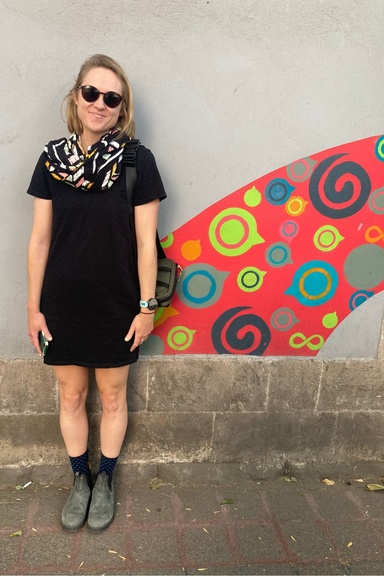
"With so many people in medicine, I think I wanted to rebel against the idea as a predestined career path at first,” she says. “I was exposed to medicine early, but I wanted to discover my own path. It wasn't until college that I made the decision for myself that medicine would be a very fulfilling path.”
The change came after a service-learning opportunity where Rempel got to know members of the Lakota nation while shadowing in clinic and emergency room settings around South Dakota’s Rosebud Indian Reservation.
“I felt like there was a direct need for people who were caring and interested not just in medicine but in listening to stories and attempting to understand,” she says.
At the time, Rempel was still exploring a number of career paths, including going to art school. Art had been a part of her life ever since she was a young child, and she was active in art programs and classes throughout her youth.
“In undergrad, a lot of my artistic pursuits were woven into trying to find this intersection between visual art, storytelling, and medicine,” she says. “I found there was a lot of potential for visual art to relay complex ideas and findings from science.”
Rempel continued this pursuit in medical school with the Humanities Distinction Track. While researching health and well-being among medical students, she began to consider how visual art could be a medium to convey what she was learning.
With physician-bioethicist Lauris Kaldjian, MD, PhD, Rempel conducted a research survey of Iowa medical students addressing whether they felt physicians have a professional responsibility to practice the same health habits they advise for their patients. The survey asked about students’ diet and exercise habits, mental health, and spiritual practices—and whether they thought their own physical health affected their ability to provide patient care.
“Most people said that they do feel they’re better able to care for patients and perform the tasks of a medical student if they are maintaining their own health. But at the same time, there’s tension there, because students are sacrificing their own health to perform those tasks,” Rempel says.
The illustrated video she produced, “Should We Practice What We Preach: Medical School and the Ethics of Self-Care,” incorporates her own drawings into an easy-to-understand explanation of the study’s findings.
These days, Rempel finds that artistic pursuits—along with exercise, connecting with friends, singing and playing mandolin in her residency band, and time spent outdoors—have helped her maintain her own well-being through the rigors of residency training in emergency medicine at University of California San Francisco–Fresno. She’s planning another illustrated video, which will explore how listening to and interpreting patients’ stories may help address systemic problems in their lives that cause frequent visits to the emergency room.
“If we can understand where they’re coming from and what the greater picture looks like, we can be better caregivers,” Rempel says.
The Humanities Distinction Track helped to set her up for a patient-centered career in medicine—one that doesn’t lose sight of what matters most.
“If the practice of medicine were purely scientific and purely biological, we’d be unable to treat the whole human,” Rempel says. “The humanities allow us to understand that a person is not just a biologic organism. They are a mother, a sister, a coworker—someone in this larger community network who matters in a way beyond the purely scientific.”
The life of the physician-writer
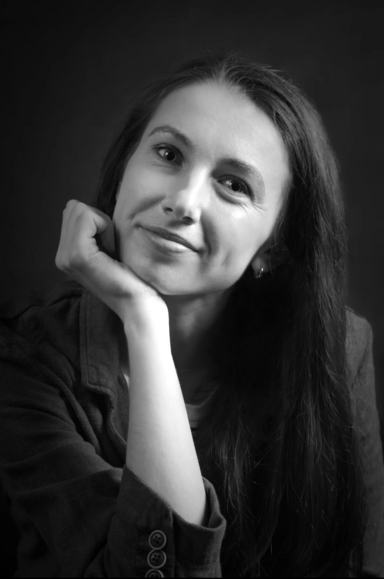
Liana Meffert (22MD) used her experience in the track to build a career incorporating her love of two arts: medicine and poetry.
"I was definitely a writer before I thought seriously about medicine,” she says. “My mom was an English major. She spent a lot of time reading bedtime stories, honing my writing skills, and encouraging me.”
Meffert’s father is a retinal surgeon, and Meffert began working in his office in high school. Helping patients inspired her to consider a career in medicine, and that interest was stoked by the idea of doing good work that also challenged her intellectually.
“Medicine has challenged me in every aspect, from pre-medical classes to medical school and now residency,” Meffert says. “That’s what really attracted me to the medical field.”
Meffert grew her passion for poetry during her undergraduate years at Emory University. She completed majors in both neuroscience and creative writing. When it came time for medical school, she was drawn to the UI Carver College of Medicine—where both her father and aunt went to medical school—and to Iowa City’s reputation for the written word due to the presence of the Iowa Writers’ Workshop.
“When it comes to trying to marry creative writing and medicine, I don’t really think there’s a better place to do it than Iowa,” Meffert says. “I think the Carver College of Medicine has done a good job of emphasizing that and taking advantage of having such an incredible program right across the river.”
Great physicians and great writers both employ the power of observation, she says, because patients aren’t usually going to tell you what’s making them sick.